About the Competition
Take a question you have been carrying, turn it into a research question, gather and read the sources, and finish it as an English research paper of your own.
Papers are reviewed fairly by university professors and other experts in each field, and outstanding papers on any of 37 countries receive a special award from that country's ambassador to Korea.
Your question becomes your first research.
The Youth English Research Paper Competition
is a research project in which students find a question
of their own, research it, and set out their thinking
in an English paper.
From economics and finance to AI, engineering,
the environment and society — you choose the subject
and finish it as an English research paper.
Fluent English alone is not what we judge.
We look at what you wondered about,
how you explored it, and what you found.
Three things you take away
-
The Power to Question
The power to ask.
You look again at something familiar
and shape a question you can explore. -
The Power to Research
The power to research.
You compare sources and weigh the evidence,
and build your own analysis and conclusion. -
The Power to Express
The power to express.
You organize your research logically
and communicate your ideas clearly in English.






The 2026 competition at a glance
- Competition
- 2026 한국금융신문 청소년 영어 연구논문대회 2026 Korea Financial Times Youth Research Paper Competition
- Host
-

- Sponsor
-
- Who can enter
- Grade 9–12 / Year 10–13 students, in Korea and abroad (Open to students at general, autonomous private, international and foreign schools, and at schools abroad)
- Fields
-
- Economics, Finance & Business
- AI, Technology & Engineering
- Science, Environment & Sustainability
- Society, Policy & Global Issues
- Interdisciplinary & Open Research
- Paper
- 3,000–10,000 words / English (around 7,000 words recommended)
- Entry fee
- KRW 1,100,000 per entrant
- Awards
-
- Grand Prize (1 overall)
- Gold (1 per field)
- Silver (1 per field)
- Bronze (1 per field)
- Ambassador Special Award / may be awarded alongside another prize
- Students at schools abroad — in China, Japan and elsewhere — may enter, as may students at general, autonomous private, international and foreign schools in Korea.
- Every entrant who submits a paper in good order receives an official Certificate of Participation.
- Specialists in each field select the winning papers. Winning papers are published on the official site and the winners are introduced through interviews.
- If the review finds no paper suitable for an award, the number of awards in that field may change.
The road to your first paper
From registration to the award ceremony — here are the dates that matter.
-
Topic
From Sep 9
-
Registration
Sep 9 – Oct 31
Online registration closed
Open to recommended students
-
Submission
Closes Dec 11
-
Review
Dec 14 – 20
-
Results
Dec 21
On this site and by individual notice
-
Ceremony
Dec 30 (Wed)
Venue: Korea Federation of Banks International Conference Hall, Myeongdong






Details of the announcement and the ceremony are shared through the notices on this site and by individual notice.
NoticesAmbassador Special Award
About the Ambassador Special Award
Submit a paper on the economy, culture, society, politics, diplomacy or international cooperation of one of 37 countries across five regions. Papers selected as outstanding in the review receive a special award in the name of that country's ambassador to Korea.
Eligible countries
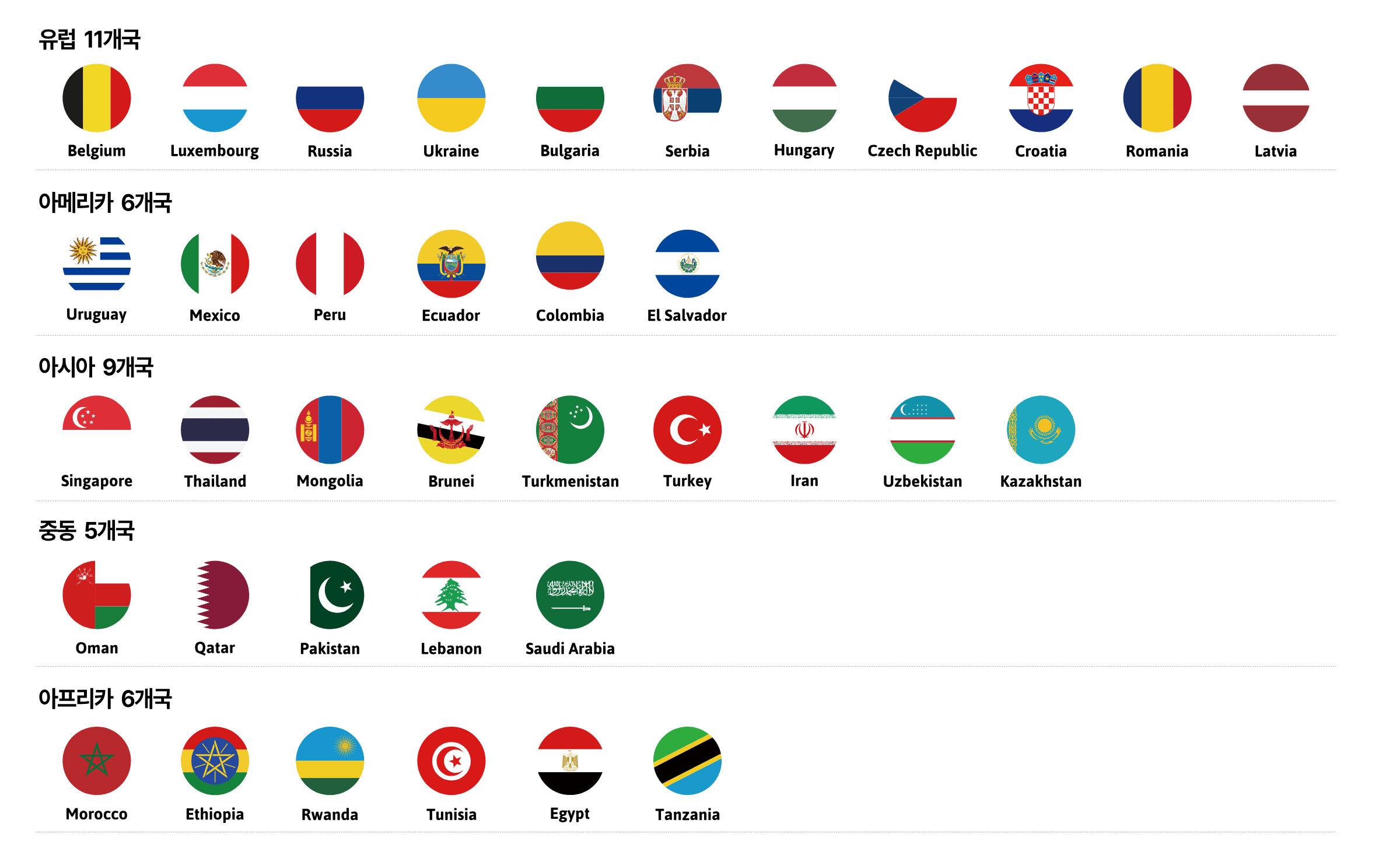
- Europe — 11 countries
- Belgium, Luxembourg, Russia, Ukraine, Bulgaria, Serbia, Hungary, Czech Republic, Croatia, Romania, and Latvia
- The Americas — 6 countries
- Uruguay, Mexico, Peru, Ecuador, Colombia, and El Salvador
- Asia — 9 countries
- Singapore, Thailand, Mongolia, Brunei, Turkmenistan, Turkey, Iran, Uzbekistan, and Kazakhstan
- Middle East — 5 countries
- Oman, Qatar, Pakistan, Lebanon, and Saudi Arabia
- Africa — 6 countries
- Morocco, Ethiopia, Rwanda, Tunisia, Egypt, and Tanzania
- The list of eligible countries may be added to or changed following discussions with the country and its embassy.
- Where the review finds no suitable paper, no special award may be given for that country.

- We encourage papers that take a positive, forward-looking view — on a country's economic development, or on ways to cooperate with it.
- Constructive and positive proposals are more likely to be favoured than political criticism or negative issues about a particular country.